IN SUCH ABUNDANCE: A HISTORY OF THE OCEAN THAT MINERALS PROMISED
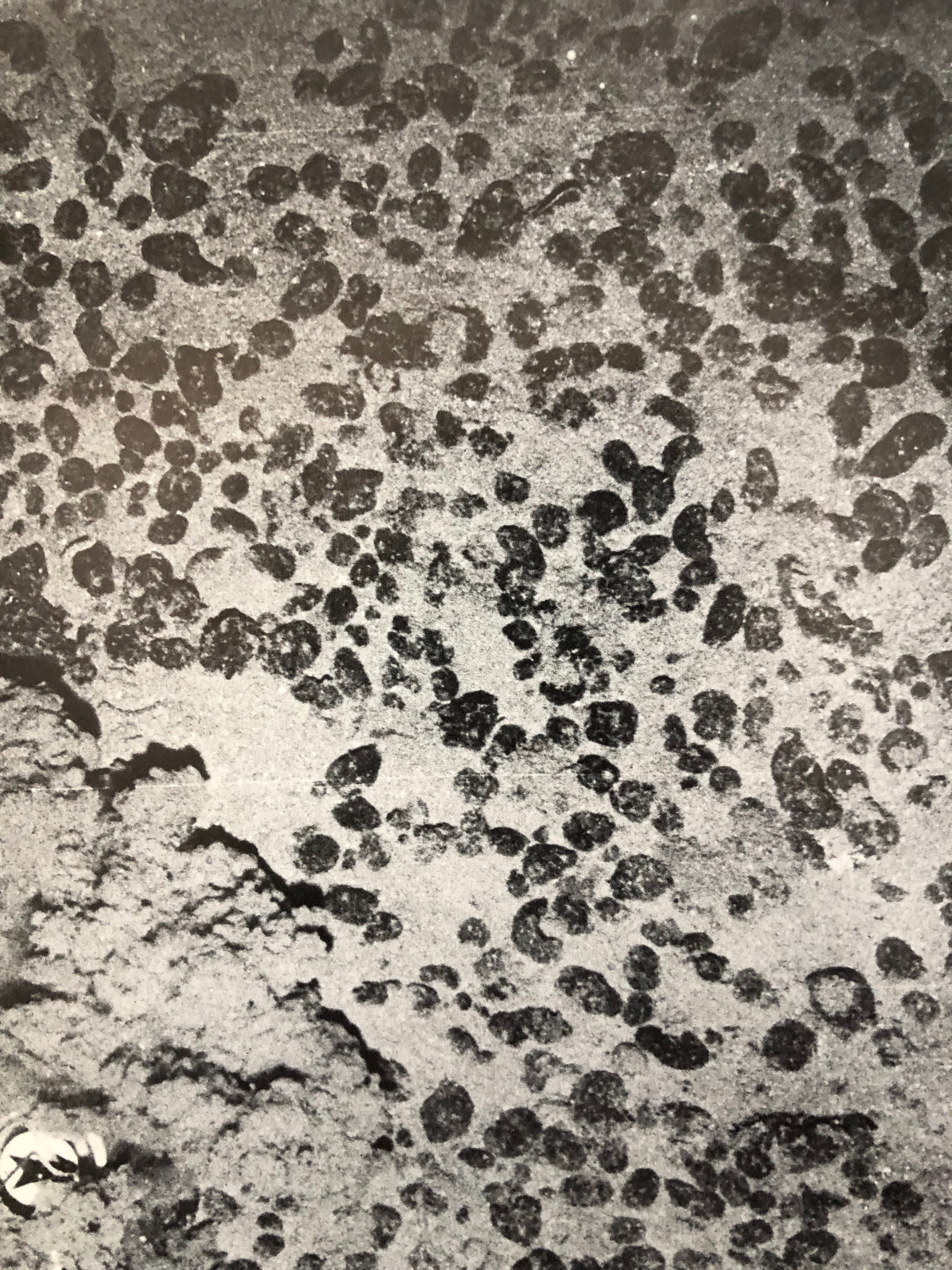
Frontispiece to Manganese Nodules: Research Data and Methods of Investigation by Ronald K. Sorem and Ronald H. Fewkes. 1979, University of Washington Press.
Deep-sea sciences and deep-sea laws evolved through one another during the mid-20th century. How are resource-making and governance mutually implicated in the history of the modern ocean?
How did the way that ideas about material abundance were conceived in the mid-20th century engender a working vision of the ocean that makes a more full and just vision of abundance impossible to envision?
This book project takes up these questions in the context of deep-sea manganese (now called polymetallic) nodules, asking how historicizing the history of ocean science’s outsides might bear on resolving lasting challenges to collective oceanic governance.
Though once again making headlines as a potential mineral resource frontier, manganese (polymetallic) nodules have commanded interest since the 1870s, and especially since the late 1950s. During the 1960s, against a background of deep seabed resources, the deep ocean simultaneously became a both resource environment and a site broadly deemed in need of governance.
The most salient feature of deep-sea minerals since their popularization at the end of the 1950s, and indeed still today, is their purported volume. Scientists and technologists in the mid-20th century characterized them as abundant, nearly limitless in quantity, and potentially even self-renewing. This book takes abundance as the organizing logic structuring debates over the future of shared seabed.
This is not to claim that mineral abundance arrived to universal acclaim. Rather, for a wide variety of people — economic geologists, engineers, geochemists, ecologists, resource economists, and ocean politicians — abundance was an imposition that required creative negotiation by key figures at the center of making and using knowledge about the deep seabed who were frustrated by the hold that nodules had on seeing the future ocean. And yet, the story about endless valuable minerals on the seabed stuck. This book tells the story of how, and with what consequences.
As a critical analysis of the mutual becoming of ocean science and ocean law, the project offers new approaches to the historical study of oceanic and other shared environments, while also offering paths forward through staid conflicts in seabed governance.
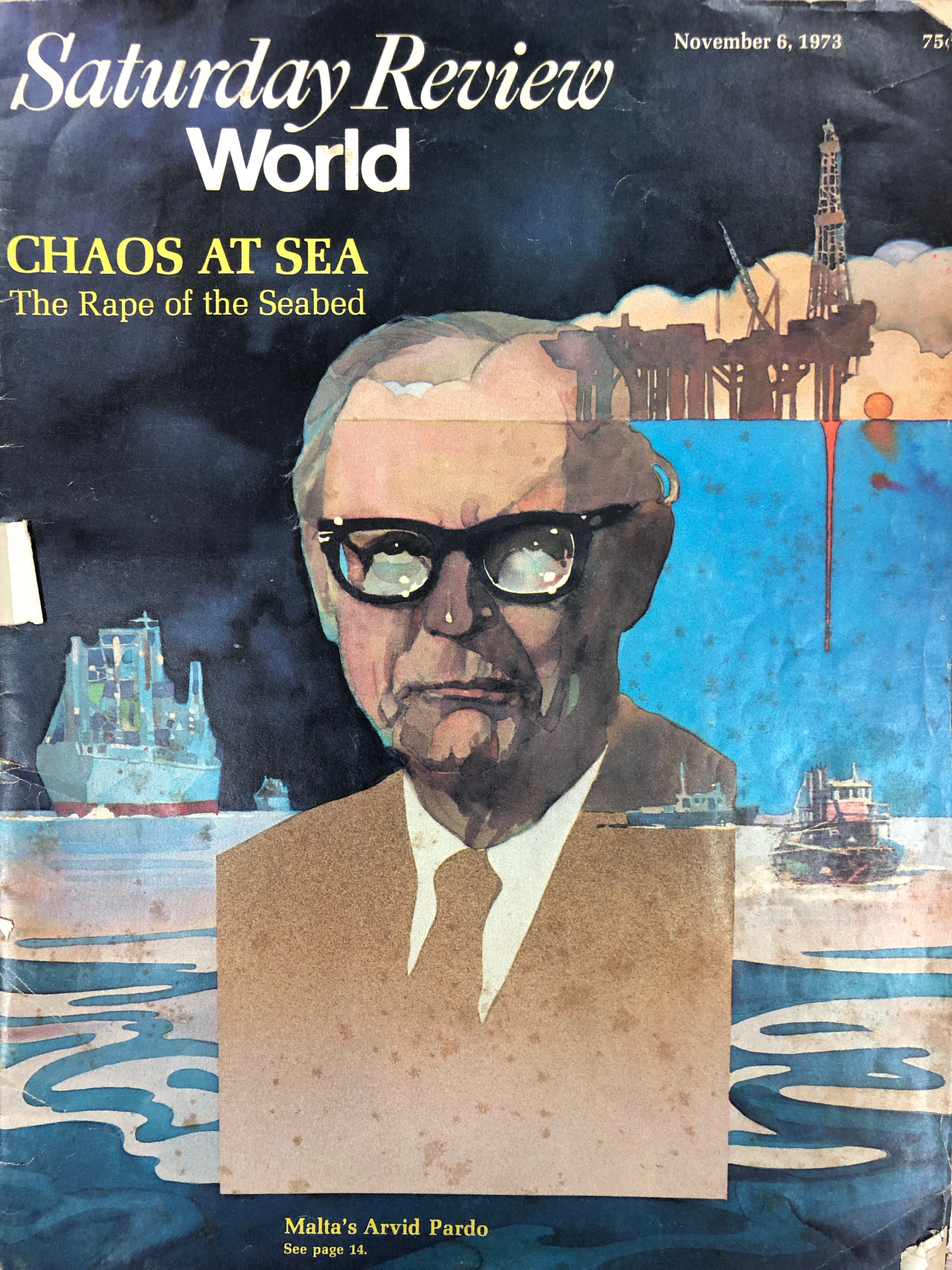 Cover of Saturday Review, featuring Arvid Pardo against a background of oil and shipping infrastructures.
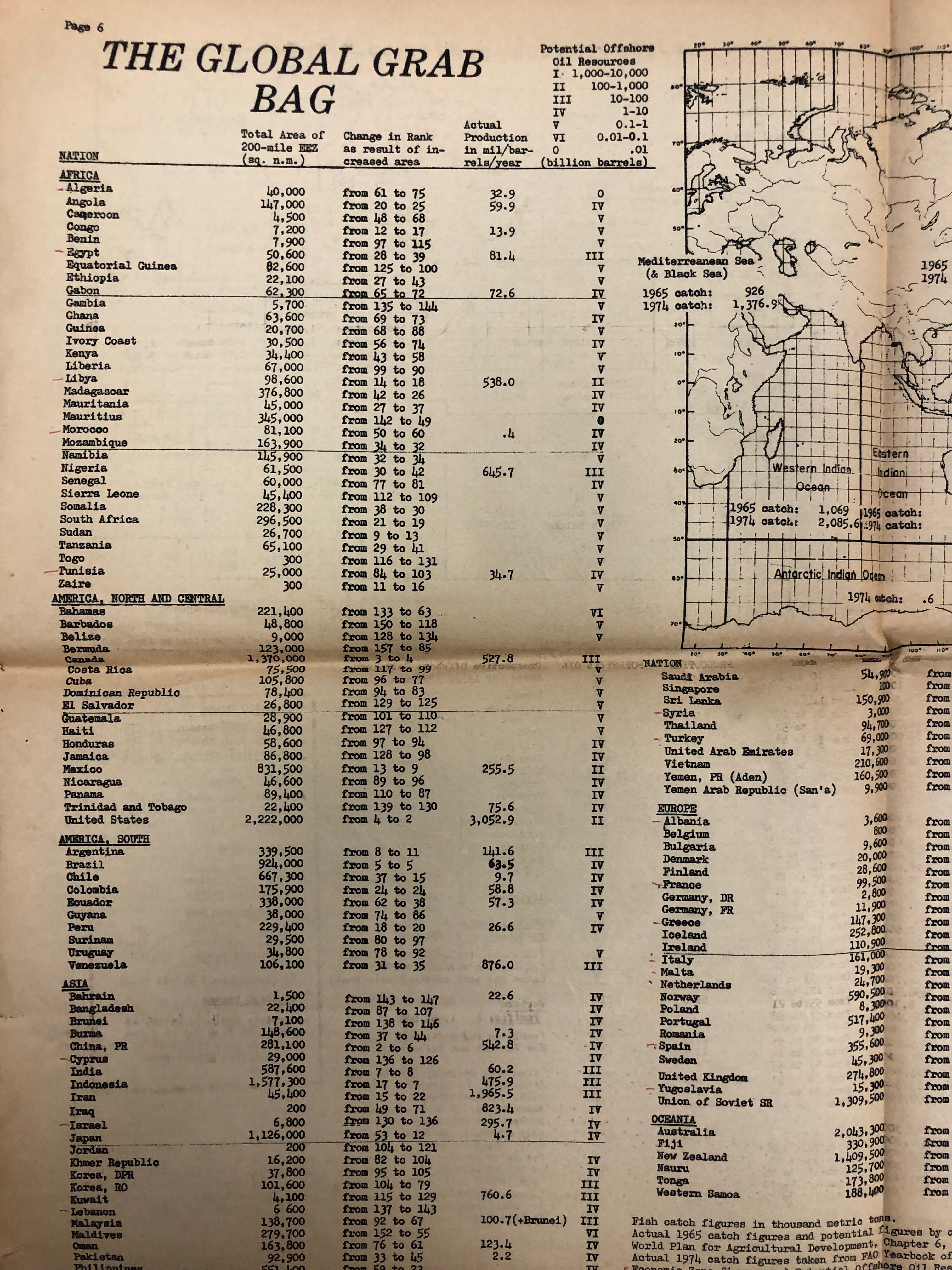 “The Global Grab Bag.” Offshore oil resources versus fisheries catches after the innovation of exclusive economic zones. Arvid Pardo Collection, IMLI Library, Malta
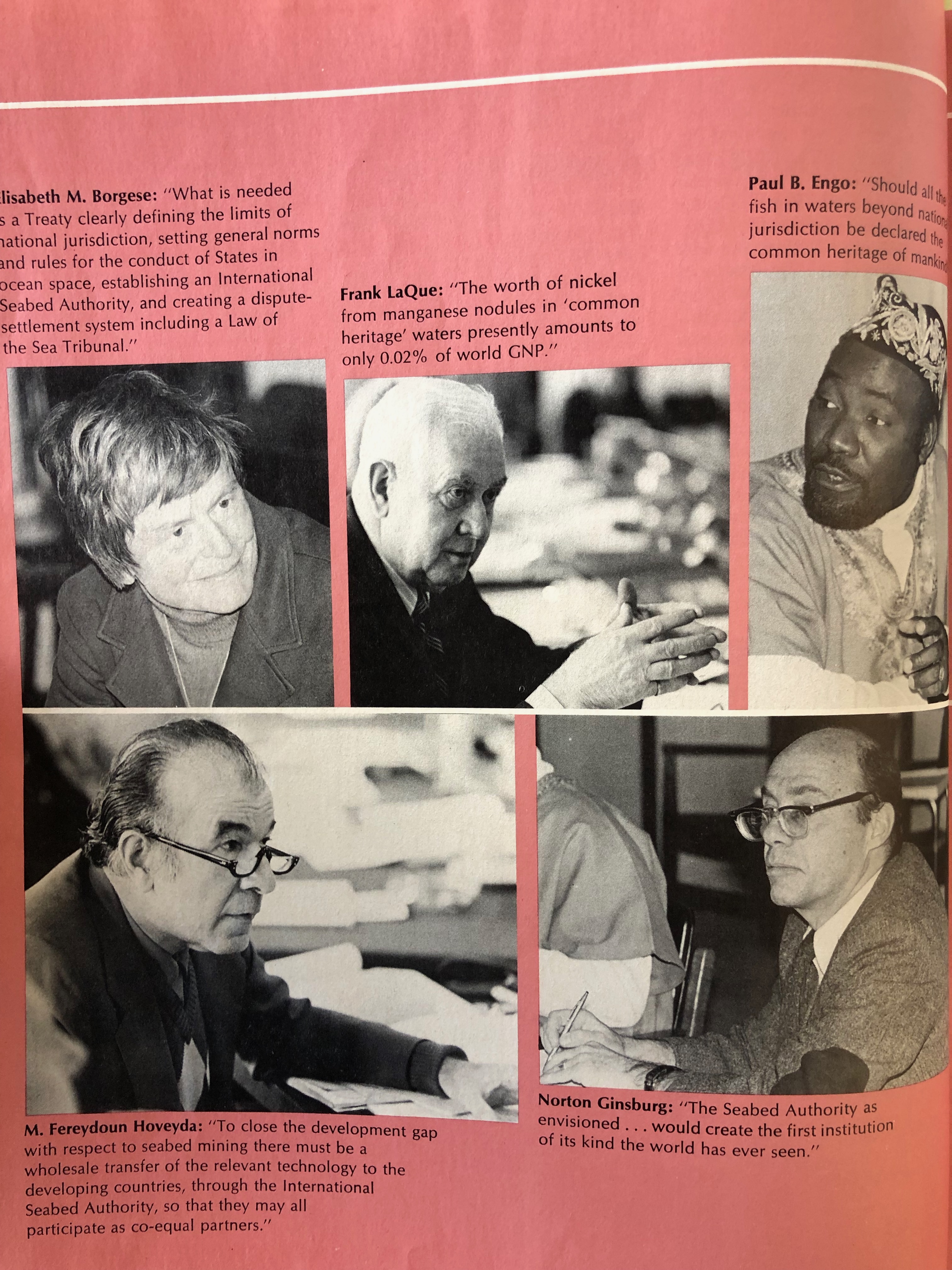 Scenes from the 1975 event, “The New International Economic Order and the Law of the Sea,” held at the Center for Democratic Institutions, Santa Barbara, CA
An outline of the project:
- Introduction: A World in a Nodule
- Ore: Precarious Inexhaustibility and the Assembly of an Oceanic Resource
- Framing Vastness and Value Between Diplonauts and Miners
- Order for the Infinite Offshore
- Rocks Like Fish or Oil
- “The Nodules are Alive and Well on the Sea-Floor”
-
Dreaming with Minerals and Anticolonial Worldmaking at Sea
- Conclusion: The Seabed, Ungoverned
- Epilogue: “The Marine Revolution which cannot be stopped”
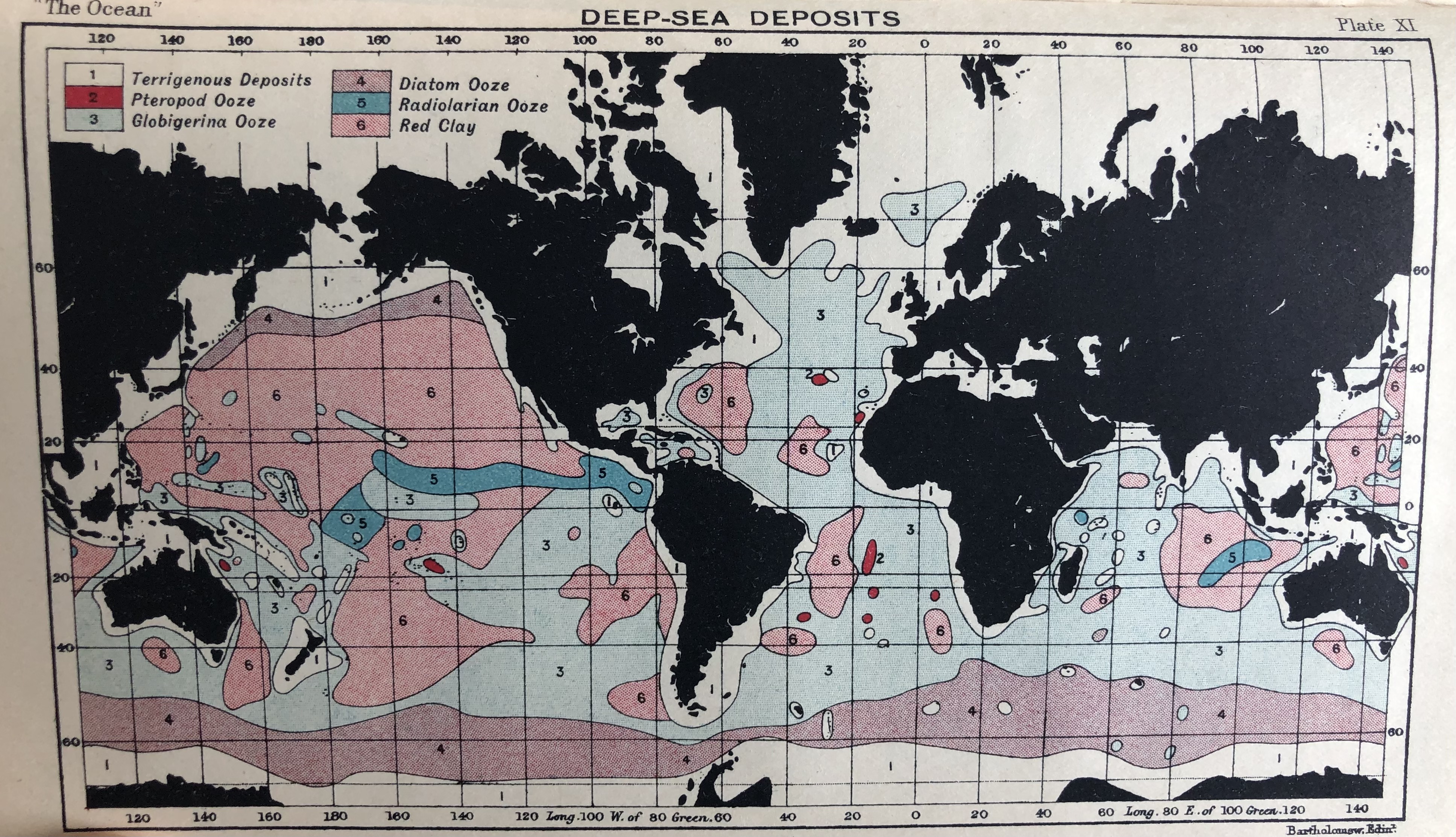
“Plate XI: Deep Sea Deposits.”
John Murray and Johan Hjort, The Depths of
the Ocean (London: Macmillan and Co., Limited, 1912).